 |
330 GT Registry |
|
Model History
There were three distinct 2+2 body styles made with the 330 (4 liter) V-12 engine totaling 1137 (1042 LHD, 95 RHD) cars including prototypes.
|
The first was a continuation of the 250 GT/E body only fitted with the new 4 liter engine retaining the other mechanical components. These are known as 330 GT America cars. The major external change was the addition of a '330 America' badge on the trunk lid. Only 50 (all LHD) examples of this model were made ranging from serial number 4953 to 5125. |
|
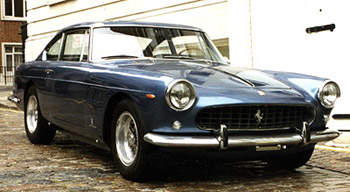
| The second was a new body style by Pininfarina with four headlights being the distinct feature in the front. The same engine was fitted along with the 4 speed and overdrive transmission from the 250 GT/E. There were several prototypes with the production serial numbers ranging from 5263 to 6883. This is commonly known as a Series 1 model and had a total production run of 503 (453 LHD, 50 RHD) cars. The prototypes were 3105, 4085, 4963 and 4967. 2947 has also been reported to be a 330 GT prototype, but it has a 250 GTE body on a 2650mm wheelbase, so is not a 330 GT prototype. |
|
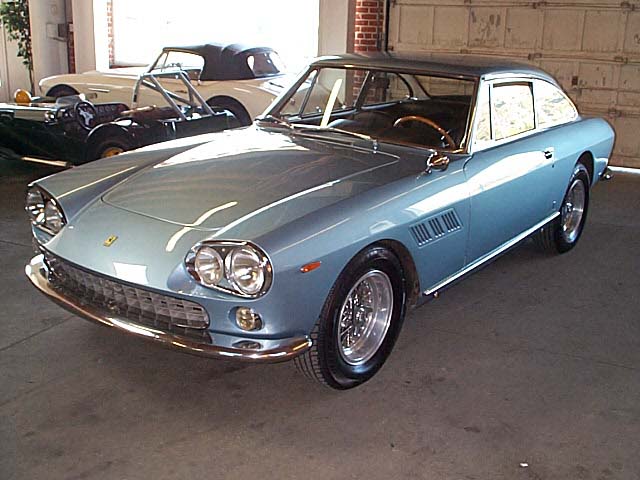
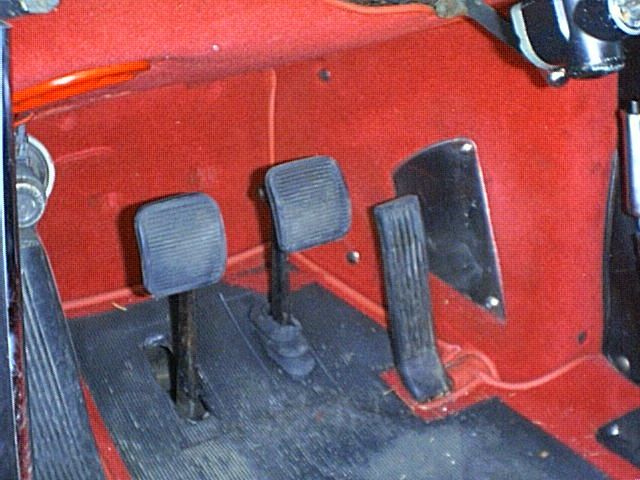
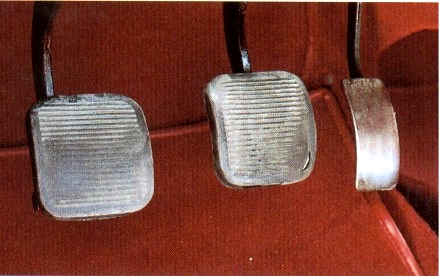
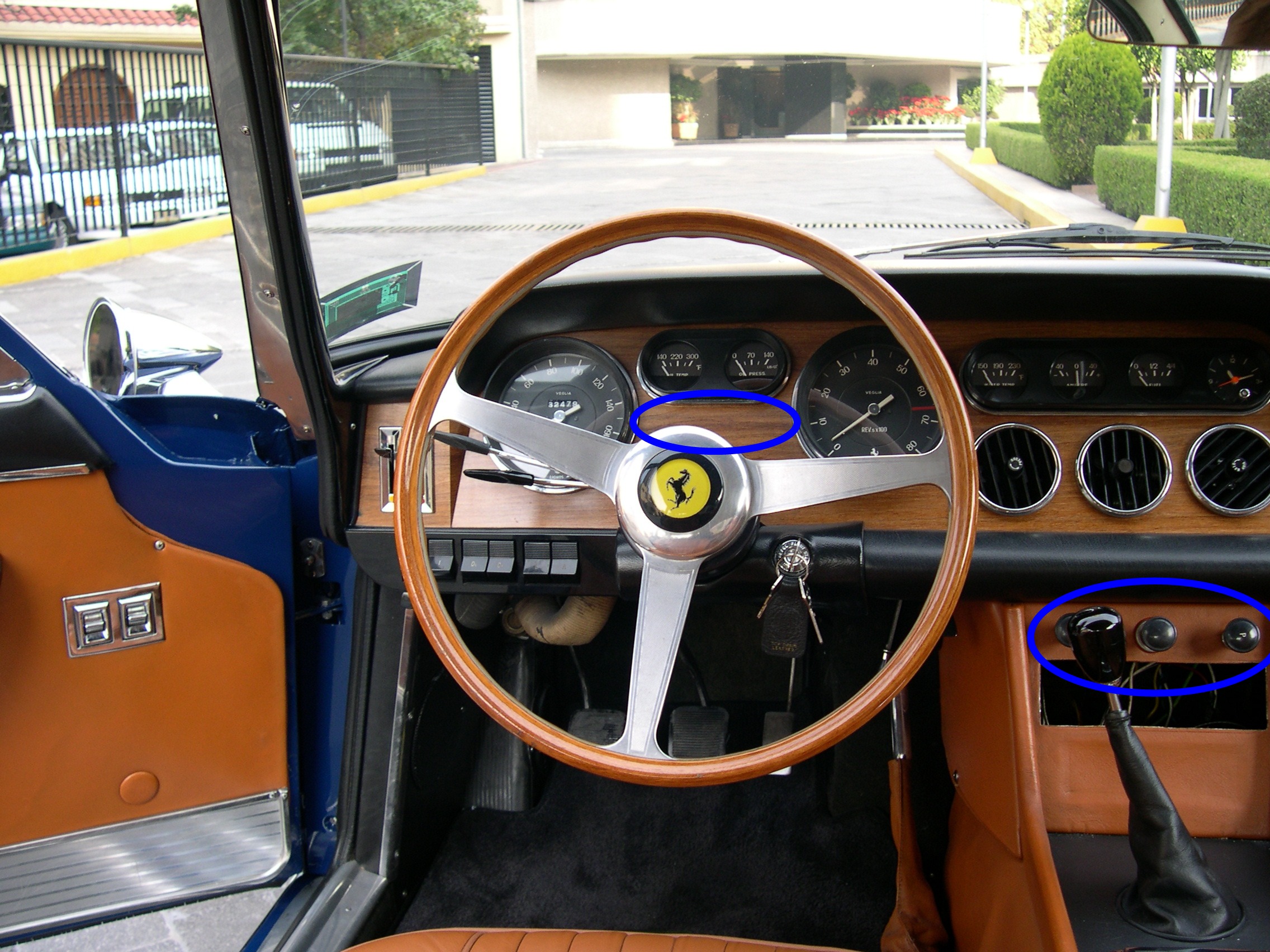
An interim version of the series 1 was made in 1965 that was fitted with a new 5 speed transmission (571/65) rather than the 4 speed with overdrive. Other mechanical changes were made at the same time, including having the clutch, brake and gas pedals mounted from above (so called hanging pedals) rather than on the floorboard. This eliminated a major source of rust problems. The dual Bonaldi brake boosters were replaced with a single Dunlop booster. Clutch actuation went from mechanical to hydraulic. The wire wheels were changed from RW 3801 (6.5x15") to RW 3812 (7x15"). The serial numbers for these cars ran from 6911 to 7547 for a total production of 124 (115 LHD, 9 RHD) cars.
 |
 |
| Floor mounted pedals with a missing boot on the left one |
Hanging pedals No rubber pad was made for the accelerator pedal |
| The final body style for the 330
GT was a redesign of the front end, changing from four headlights to
two. The turn signals were also different. The fuel filler was moved
from the right side to the left side. The bumpers were changed to three
piece units with rubber faced overriders covering the joints. The
slotted side air vents were changed to a three piece scoop design. Air
conditioning and power steering were added as factory options. Alloy
wheels became standard with the RW 3812 wire wheels being an option.
Power windows were made standard. A
total of 460 (424 LHD, 36 RHD) of this Series 2 model were made with the
serial numbers running from 7553 to 10193. There was
one prototype, 7353. Ferrari made some mechanical changes during the 2HL production run, including a different 5 speed transmission (571/66) around 8279. The engine mounting also changed from 4 mounts to a 2 mount method, at the same time the new 5 speed transmission was introduced. The heater valve was also moved from the front of the engine to the rear. Somewhere between 8953 and 9001, the brake booster was changed from Dunlop to Bonaldi. |
|
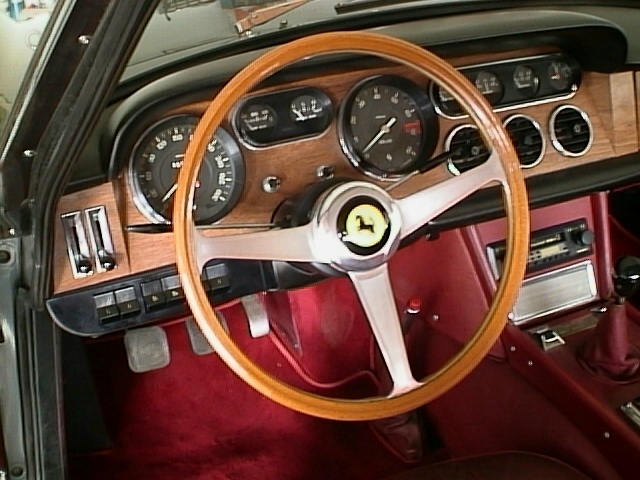
| A few early cars came with a
painted metal dash rather than wood. You can see one of these on the right. Also note the absence of the
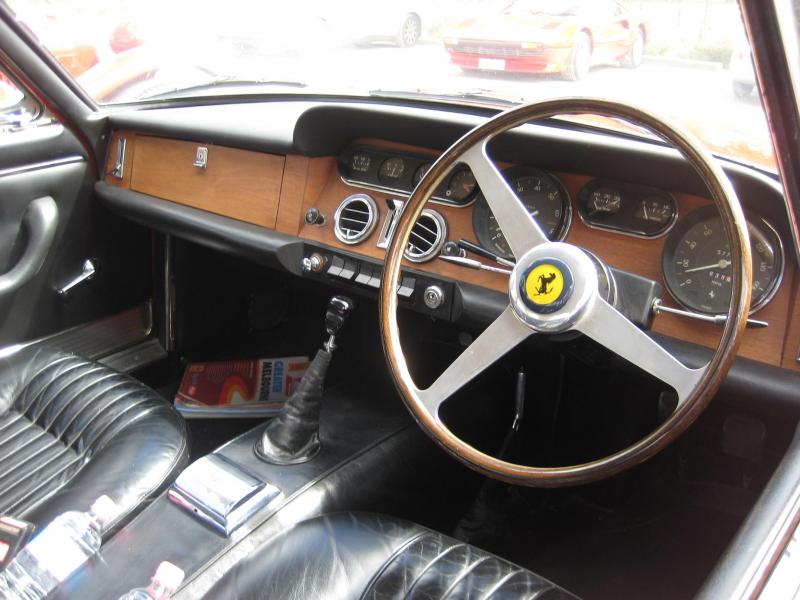
console. The interior dash was completely redesigned at a slightly later time (between 8245 and 8283) with the most notable change being the switches were moved from the center to the outside of the steering wheel. Right hand drive cars as late as 8685 are known to have the old style dash. The center air ducts were changed to facilitate the addition of air conditioning. The A/C switches are built into the center knobs of the two outside ducts. The left controls the temperature and the right the fan speed. This dash was used on earlier cars as needed if they were fitted with A/C. In this case, the ignition, wiper and dash rheostat switches were mounted in the top of the console. The trip odometer reset was still left dangling to the left of the steering wheel. One car (8663) was even ordered with the dash in Formica!
|
|
|
|
|
| Right hand drive versions of all models were made for the British and other markets. The gauges had either metric or US markings depending on the original destination country. In the last two years of production, some emission controls (mainly a crankcase breather) were added for the US market. The front turn signal lenses and the rear taillight lenses were different colors for the US market. |
|
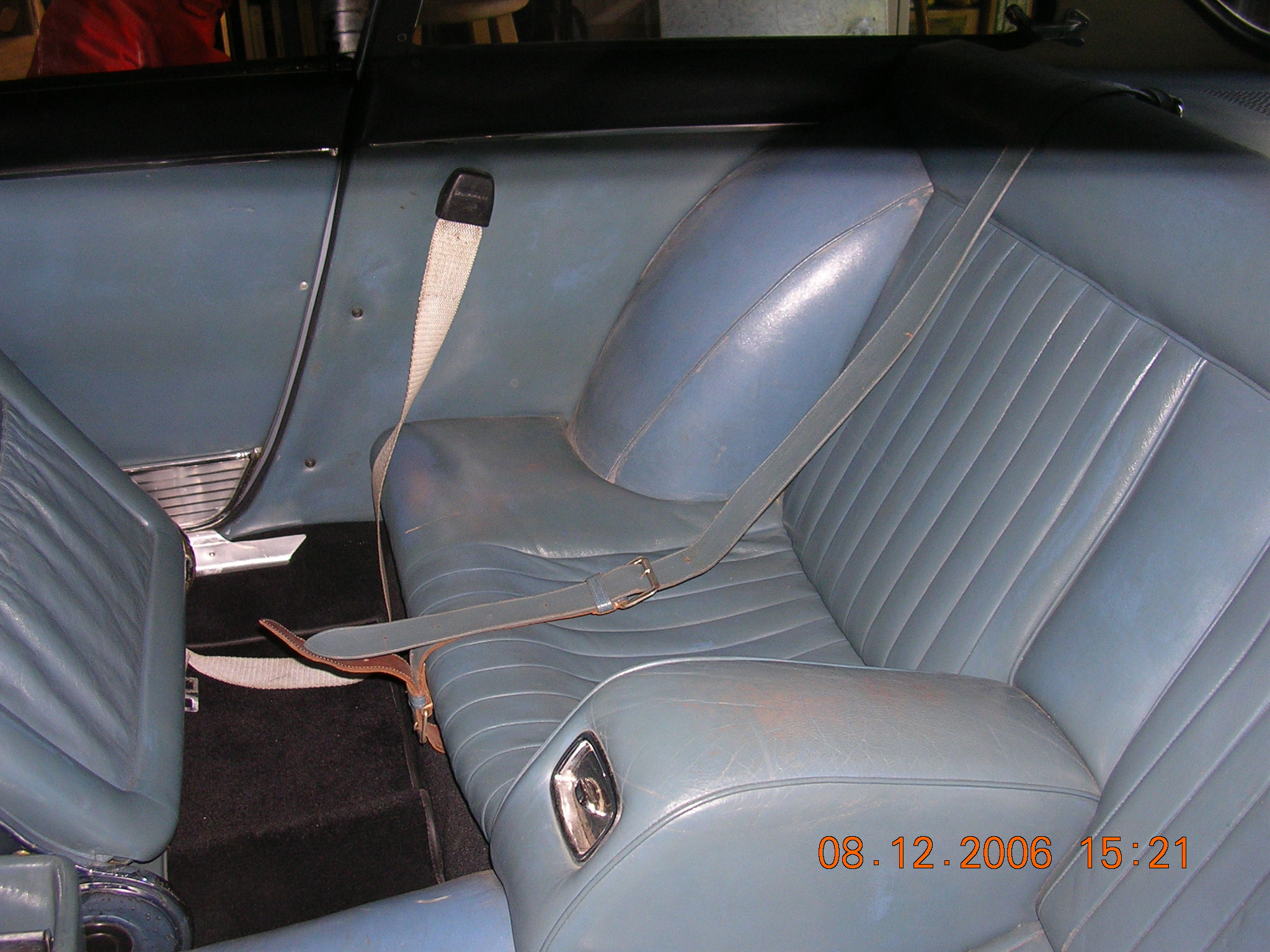
| One option selected on about eighteen 330 GTs was having a luggage shelf. Instead of replacing the rear seats, the option consisted of adding luggage straps as seen in this picture of 7917's rear seat area. |
|
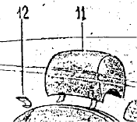
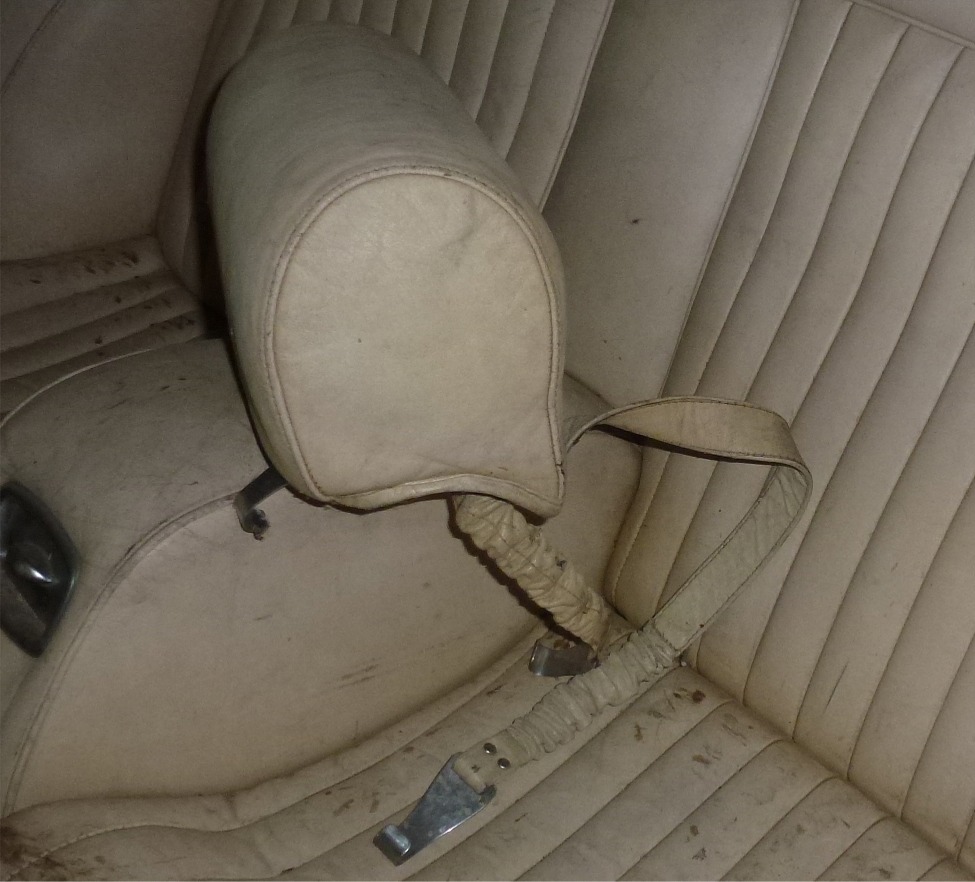
Another option was having headrests with that being selected on about three dozen cars. Part 12 is described as 'hook for seat headrest mount ( gancio per attacco appoggiatesta a sedili)'. This headrest is from a long time owned unrestored car, 9153.
|
|
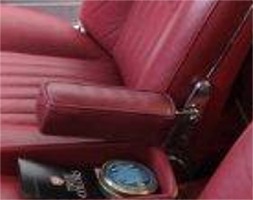
| One car (7909) had an option of an arm rest listed in the Allestimenti. This arm rest is still installed in the car. As you can see, it is attached to the passenger seat hinge. |
|
|
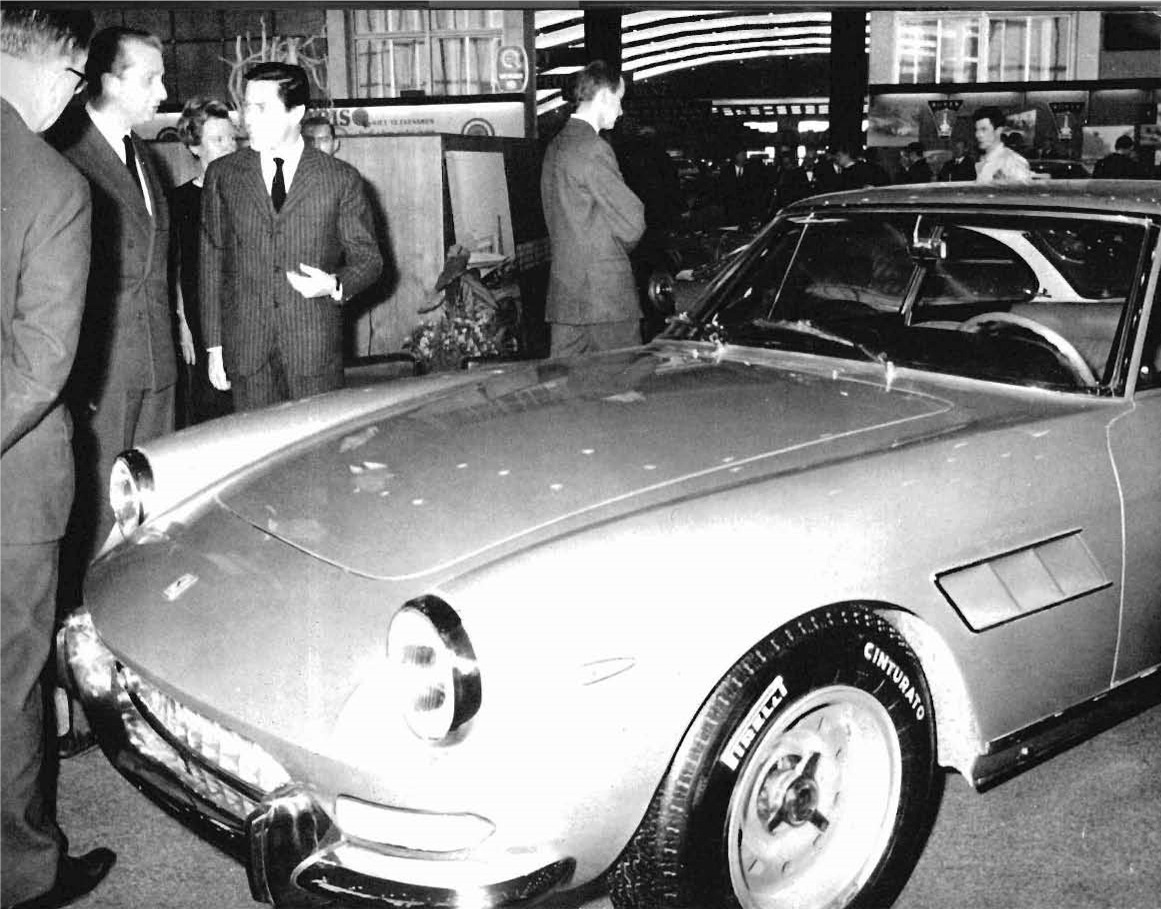
8109 was the 1966 Brussels show car and
pictured in the Ferrari 1966 yearbook. It was ordered with a "maniglia
di ricupero". Literal translation of "recovery bar" or Massini's
translation of "O-Shit-Bar". Mounted on the dash above the glove
box for use by scared passengers. Sorry, no picture of the bar as 8109 is now a TR replica. |
|
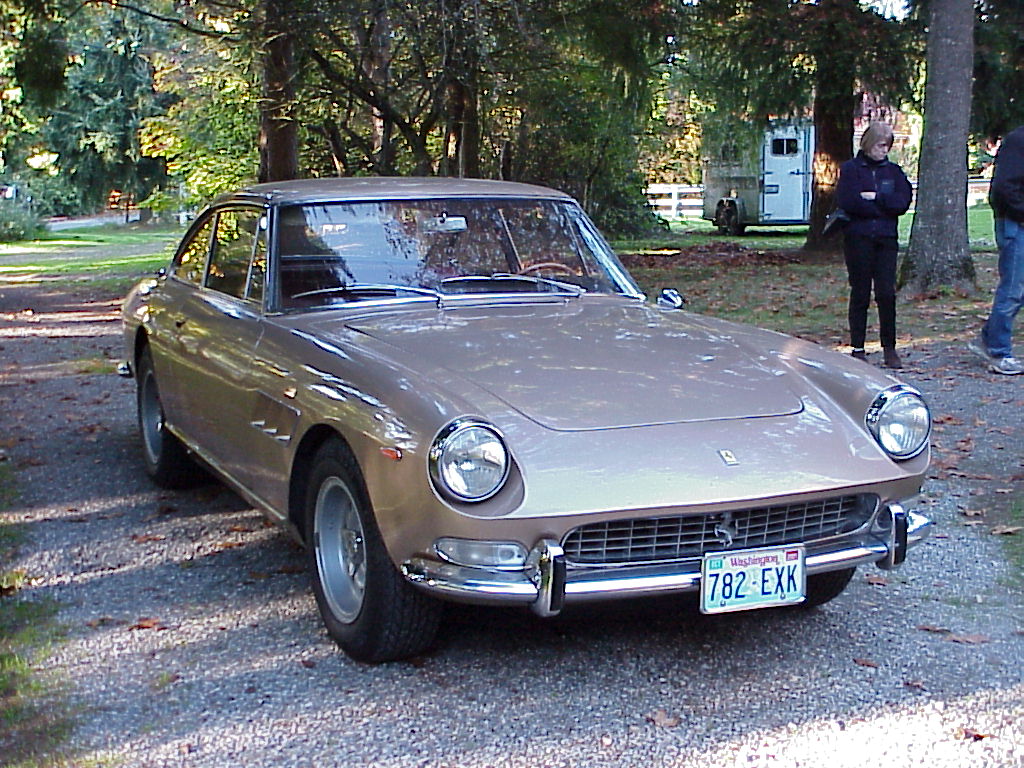
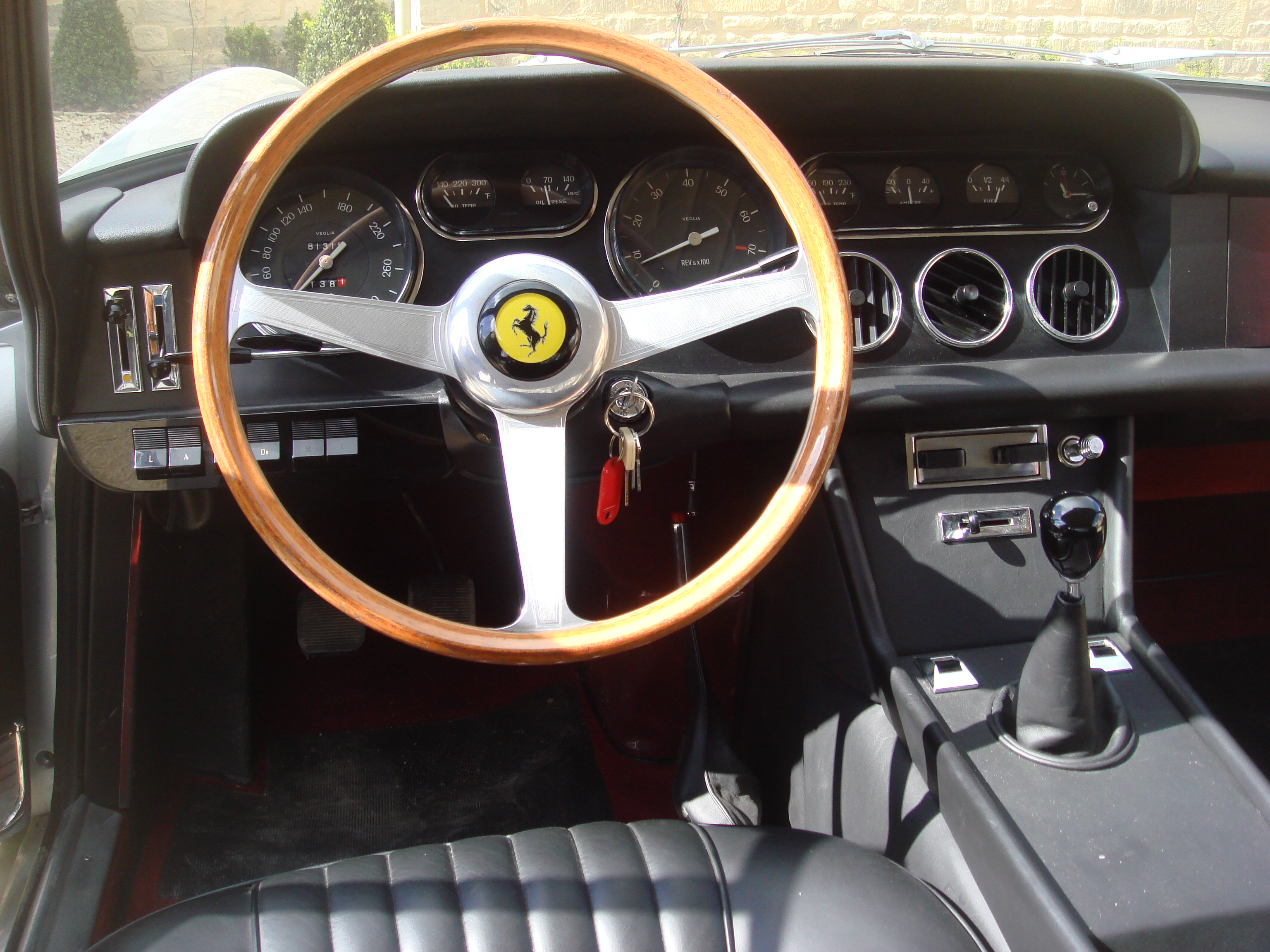
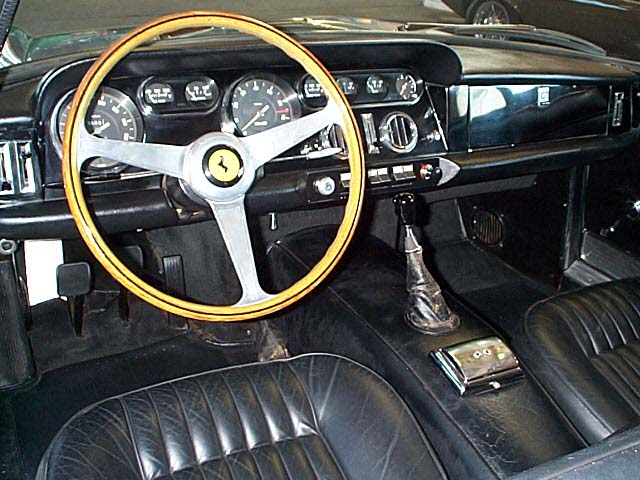
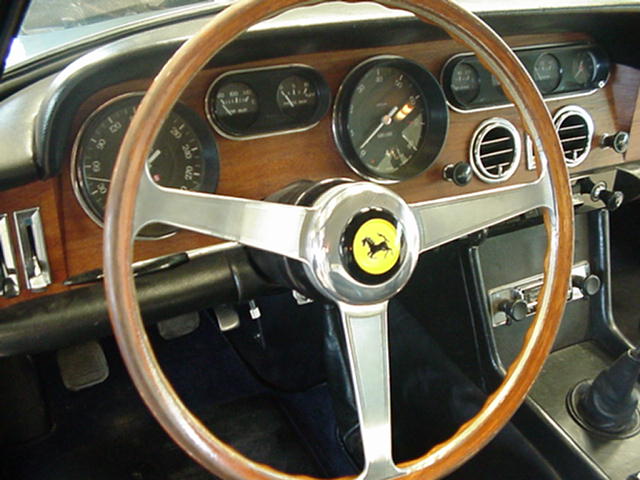
For the detailed changes in the production run, click here.
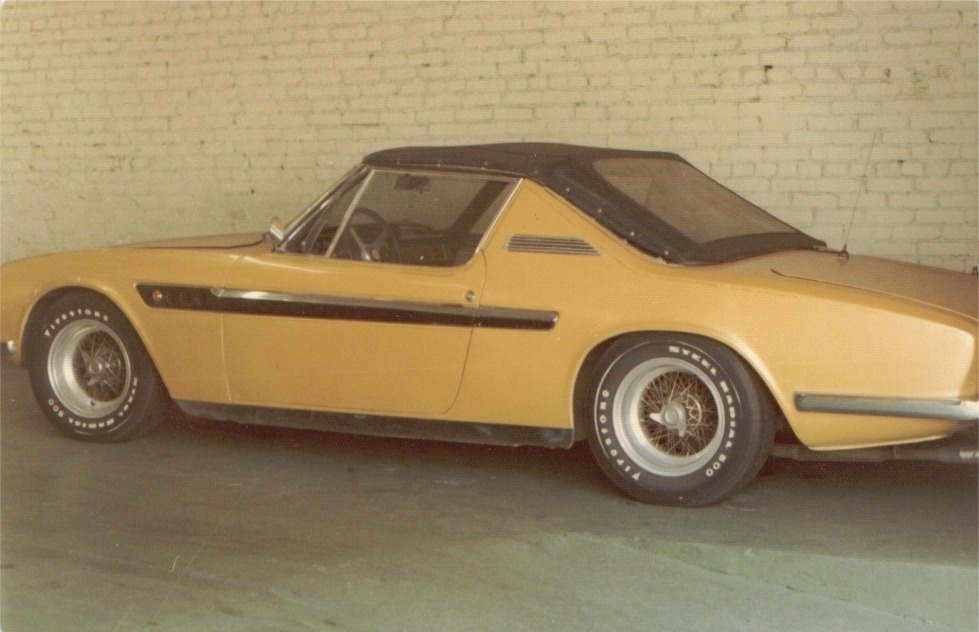
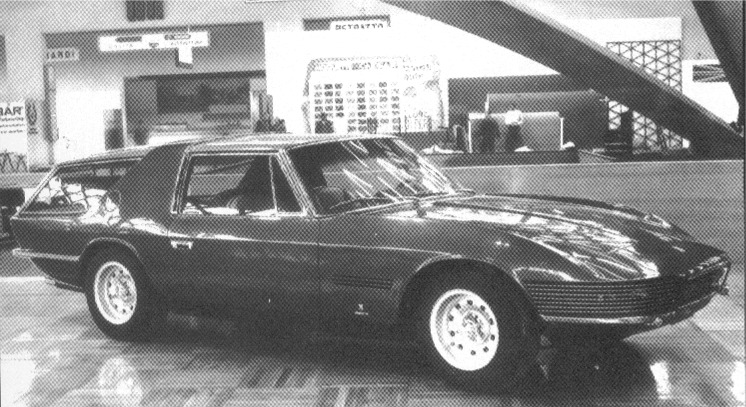
A few special bodies were produced on 330 GT chassis. These included SN 6109, a cabriolet; SN ?, a coupe; SN 7963, a shooting brake, all ordered by Chinetti and SN 7979, the 'golden' car, body by Drogo.
 |
 |
| SN 6109 - Michelotti Cabriolet Special | SN 7963 - Vignale Shooting Brake |
 |
|
| SN 7979 - 'The Golden Car' by Drogo | |
Quite a few have been rebodied as various 250/330 GTO and other 'in demand' models. This was really prevalent in the early '90s when the prices went through the roof.
The four headlight body was designed by Tom Tjaarda who was working for Pininfarina at the time. Here is the 1/6 scale model used for air flow testing.
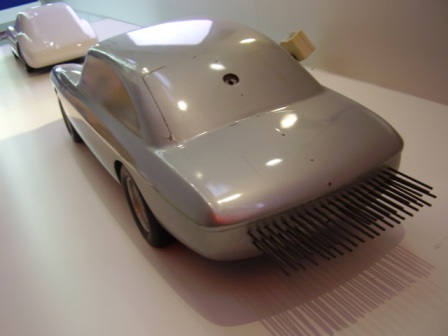
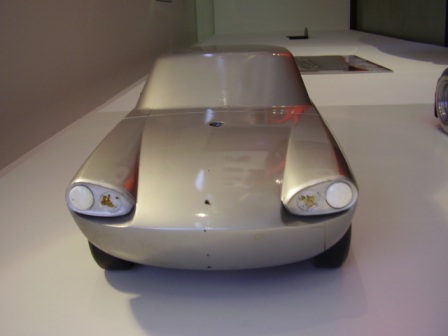
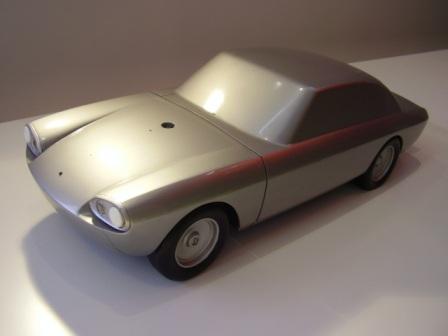
The tubes coming out the back are pitot tubes, used to
detect the air flow turbulence at the rear of the car.
This same model was exhibited at 'Ferrari - Under the Skin' exhibition at the Design Museum in London, December 2017
.JPG)
.JPG)
.JPG)
.JPG)
.JPG)
Pictures courtesy of Andrew Stevens